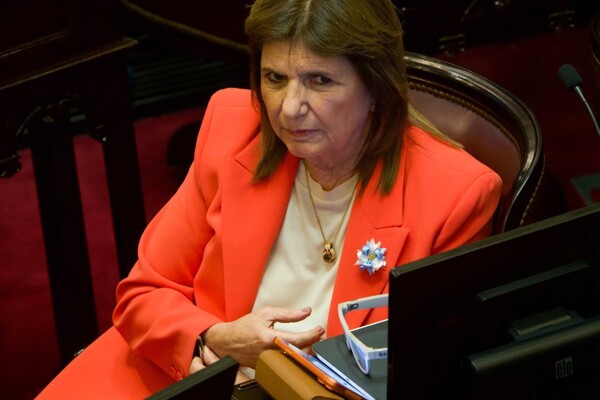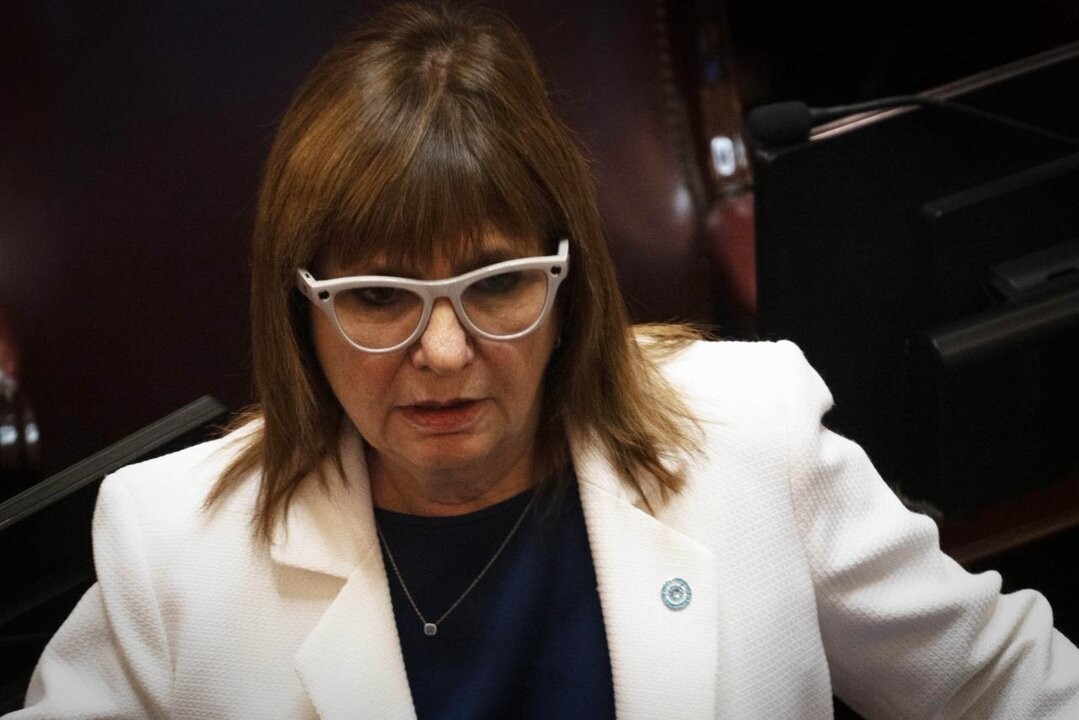
Buenos Aires, February 27 (NA) — The Senate will debate this Friday from 11 a.m. the labor reform and Juvenile Penal Law projects, and the ruling party will seek to obtain its last legislative victory of the extraordinary session period on the eve of President Javier Milei's speech before the Legislative Assembly. According to what the Argentine News Agency was able to learn from legislative sources, according to the parliamentary work order, the labor reform will be debated first and then the Juvenile Penal Law. Juvenile Penal Law The reform of the Juvenile Penal Law, approved last Thursday by the Chamber of Deputies, reduces the age of criminal responsibility from 16 to 14 and proposes for minors sanctions ranging from brief to 15 years in prison for serious crimes. The special regime for minority proposed by the ruling party proposes a range of sanctions or alternative punishments to deprivation of liberty, establishes that minors should not be mixed with adults in places of confinement and includes complementary measures for resocialization. For crimes with sentences of less than 3 years, prison sentences are ruled out, while for sentences of between 3 and 10 years linked to crimes that have not caused death or serious injuries, other types of sanctions with a social and educational focus are prioritized. Labor Reform The initiative, promoted by the Executive Branch, will have a strong impact on labor relations as it contemplates profound reforms in the dismissal system, vacations, collective bargaining, and the right to strike in essential services. The Senate called the session to approve the only change introduced by the Chamber of Deputies, where controversial article 44, which reduced salaries for sick or accident leaves outside the work environment, was eliminated. La Libertad Avanza, which is chaired by Patricia Bullrich, will arrive at the session a day after having dealt with the Juvenile Penal Regime and the reform of the Glaciers Law, and after having passed in December the Budget and Fiscal Innocence laws. The project obsesses Milei. The ruling party had to carry out an express procedure between the approval of that initiative in the Chamber of Deputies last Friday and the issuance of the Senate's opinion, which occurred at noon that same Friday, which caused angry complaints from the opposition. As happened when the reform was first approved on February 11, the Government already has the support of allied governors from Chubut, Ignacio Torres; from Mendoza, Alfredo Cornejo; from Corrientes, Juan Pablo Valdés; from San Juan, Marcelo Orrego; from Neuquén, Rolando Figueroa; from Misiones, Hugo Passalacqua, and from the Peronists of Tucumán, Osvaldo Jaldo, and of Salta, Gustavo Sáenz. But the sanction of the law was not simple and required that the Government's Political Committee, headed by the General Secretary of the Presidency, Karina Milei, face negotiations with governors and legislators from dialogist blocks for almost two months. With these consensuses woven, the ruling party managed to approve the project on February 11 in the Senate and on Thursday 19 in Deputies, although with the modification of article 44. Project Details The law will have a full impact on labor relations as it will introduce changes in vacations, overtime, collective bargaining, and the right to strike. Among other reforms, the project establishes that vacations may not be granted during the summer since every 3 years they will correspond to the employee in the summer season, in addition to the fact that they can be split into periods of no less than 7 days. In addition, companies will not be obliged to pay employees for overtime because there will be a compensation system: if a worker works 12 hours instead of 8, they can be given 4 hours to compensate. The maximum working day will be 12 hours (with 12 mandatory hours of rest) and that extension will be compensated with a reduction of the working day on another date on the calendar. Dismissals will be more economical for companies since the bonus, vacations, or prizes will not be computed, and it will only be based on the basic salary; the average salary of the activity will be taken as a basis. Indemnifications can be paid in 12 installments in large companies and 18 in SMEs, just like judicial sentences. In terms of unions, the contribution that is deducted from workers for the union will be maintained with a cap of 2%, and the employer will remain as the withholding agent, as the CGT demanded. Meanwhile, collective agreements with an expired term will not maintain their effects over time until the signing of a new collective agreement. It will also be allowed in the collective bargaining of an activity, branch, region, company agreement and/or through an individual agreement or unilateral decision of the employer, to incorporate other additional dynamic, temporary, fixed, or variable remunerative components on top of salaries. The right to strike is restricted by declaring certain activities as “essential services”, with the obligation to guarantee a minimum coverage of 75%, and “transcendental services”, with the obligation to guarantee a minimum coverage of 50%. Likewise, they will be considered “very serious infractions”, with impediments to carrying out blocks, when any of the following hypotheses are met: “Affecting the freedom of work of those who do not adhere to a measure of force through acts and/or facts and/or intimidations or threats”.